|
Periolase
Laser Gum Treatment
Have you been told that you have gum disease? Gum disease, also
known as periodontal disease, is an infection that destroys the gums
and supporting bone surrounding your teeth. Three out of four adults
35 years and older may be affected, and according to the ADA
(American Dental Association), more than 60% of the adult population
has periodontal disease. Bleeding gums, tooth movement, loose teeth,
bad breath, or pain associated with brushing, are all symptoms of
periodontal disease. There is
mounting evidence regarding the direct link between periodontal
disease and a variety of other, possibly life-threatening diseases.
Periodontal disease has been linked to heart attacks, strokes,
miscarriages, and low birth weight.
LANAP (Laser Assisted New
Attachment Procedure) is used to treat periodontal disease and save
many teeth that were previously considered hopeless. It uses the
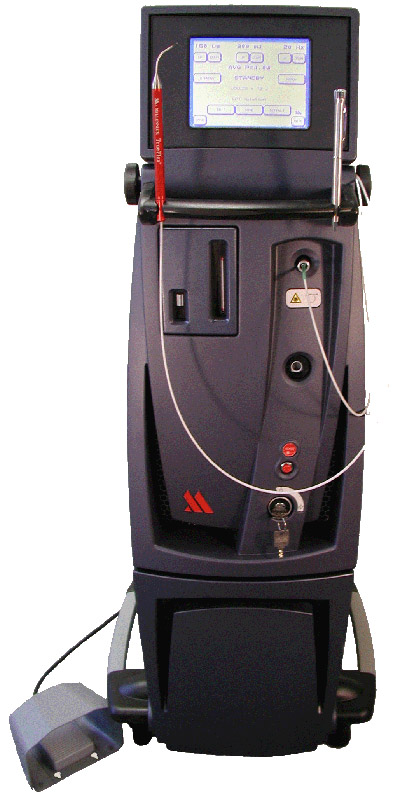
world’s first digital dental laser--the
PerioLase ® MVP-7
, which was specifically designed for treating periodontal disease.
The PerioLase ® laser is used as part of Laser Periodontal Therapy™,
to remove harmful bacteria and diseased tissue from the gum pocket
by passing a laser light between gum and tooth. Patients don’t hear
or feel it – except for a little warmth.
LANAP promises the patient a more
comfortable method to treat gum disease. The procedure’s method of
eliminating germs from the gums is very similar to lifting ink from
a paper. First, the laser uses heat to remove the infection from the
gum lining. The laser only seeks out infected tissue, which is
darker in color than healthy tissue, leaving healthy tissue in
place. The teeth and roots then can be cleaned. The laser is
used a second time to seal the gum tissue back to the tooth,
protecting the newly-lasered tissue. This allows the body to heal
naturally so that the gum pockets improve and the teeth become more
stable.

The laser is an effective tool for improving
overall dental health with less
pain, less bleeding, less swelling, less tissue removal, and less
recovery time than traditional gum surgery or periodontal treatment.
You don't have to worry about bleeding, stitches or post-treatment
infection, because your gums haven't been cut. You will also enjoy
fewer follow-up visits.
|